Bone Atrophies
| Bone Atrophy | |
|---|---|
| Definition | Loss of bone volume and density |
| Main cause | Prolonged edentulism |
| Affected bone | Alveolar |
| Preserved bone | Basal |
| Solution | Bilateral Sinus Solution™ (BSS) |
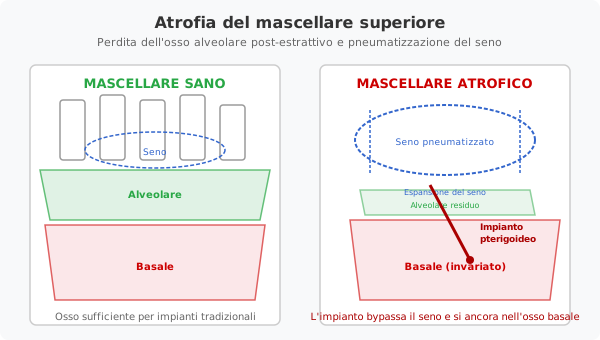
Maxillary bone atrophy is the progressive loss of volume and density of the alveolar bone that occurs after tooth loss. This phenomenon is the main challenge of modern implantology.
Classification of maxillary atrophy
Maxillary atrophy is classified according to the AMP system (Atrophy-Morphology-Pathology, being accredited) with grades A0-A3, M0-M2 and P0-P2, and according to Cawood and Howell in six classes from dentate (I) to depressed ridge with loss of basal bone (VI). These classifications guide the choice of the most appropriate implant approach.
AMP classification (being accredited)
| Parameter | Grades | Description |
|---|---|---|
| A (Atrophy) | A0, A1, A2, A3 | Degree of vertical atrophy |
| M (Morphology) | M0, M1, M2 | Ridge morphology |
| P (Pathology) | P0, P1, P2 | Presence of associated pathologies |
Cawood and Howell classification
- Class I: Dentate
- Class II: Immediate post-extraction
- Class III: Rounded ridge, adequate height
- Class IV: Knife-edge ridge
- Class V: Flat ridge
- Class VI: Depressed ridge, with loss of basal bone
Causes of maxillary atrophy
The main causes of maxillary atrophy are prolonged edentulism, periodontal disease, trauma, the pressure of removable dentures and pneumatisation of the maxillary sinus. All these factors lead to the progressive loss of alveolar bone volume, while the basal bone remains intact and available for the Bilateral Sinus Solution™ (BSS).
- Prolonged edentulism: the most common cause
- Periodontal disease: chronic inflammation that destroys the alveolar bone
- Trauma: fractures or traumatic tooth loss
- Removable dentures: the pressure of the prosthesis accelerates resorption
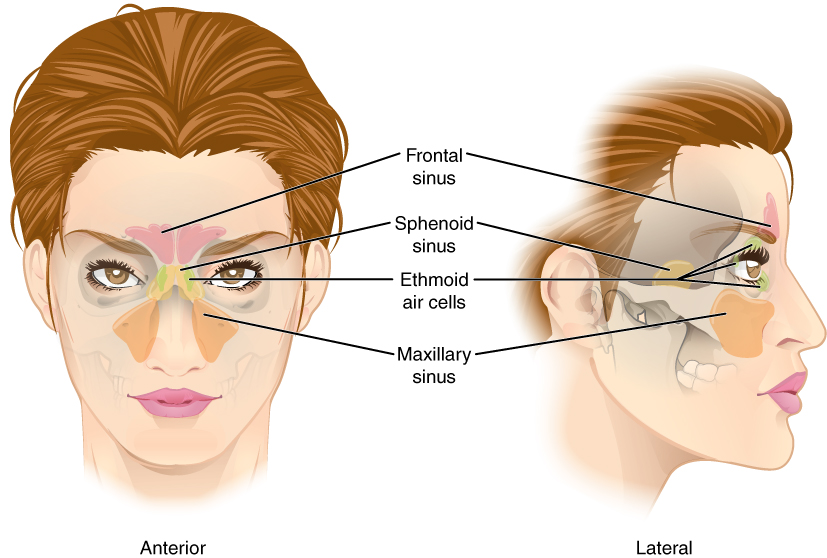
- Pneumatisation of the maxillary sinus: the sinus expands occupying the space of the resorbed bone
Posterior maxillary atrophy
The posterior area of the maxilla is particularly critical due to the pneumatisation of the maxillary sinus and the resorption of the alveolar bone, creating a bone gap that prevents the placement of traditional implants without grafts or sinus lifts. The Bilateral Sinus Solution™ (BSS) solves this problem by anchoring the pterygoid implants in the posterior basal bone.
The posterior area of the upper jaw is particularly critical for two reasons:
- Pneumatisation of the maxillary sinus: the sinus progressively enlarges reducing the available bone
- Resorption of the alveolar bone: the loss of the upper molars leads to the resorption of the ridge
The result is a bone gap in the posterior area that makes it impossible to place traditional implants without bone grafts or sinus lifts. The Bilateral Sinus Solution™ (BSS) solves exactly this problem.
Why the basal bone does not atrophy
The basal bone does not atrophy because it is a primary bone, genetically determined, that does not depend on the presence of teeth for its maintenance. The insertions of the pterygoid muscles and of the buccinator exert tractions that maintain the trophism of the basal bone even in the complete absence of teeth, making it ideal for implant anchorage in BSS.
The basal bone is not affected by atrophy because it is a primary bone, genetically determined, that does not depend on the presence of teeth for its maintenance. The muscular insertions (pterygoid muscles, buccinator) exert tractions that maintain the trophism of the basal bone even without teeth.
Traditional solutions vs BSS
The traditional solutions for atrophy (bone grafts with harvesting from hip/skull/mandible and maxillary sinus lift) are invasive, require 6-12 months and involve significant risks. The Bilateral Sinus Solution™ (BSS) offers a minimally invasive alternative: direct anchorage in the basal bone without grafts, immediate loading and fast recovery.
| Approach | Procedure | Invasiveness |
|---|---|---|
| Bone graft | Harvesting from donor site (hip, skull, mandible) and grafting | High |
| Maxillary sinus lift | Elevation of the sinus membrane and insertion of bone | High |
| Bilateral Sinus Solution™ (BSS) | Anchorage in the basal bone without grafts | Minimal |
The Circolare d'Autore® prosthesis
- 14 teeth per arch, including all posterior molars
- Zero fake gum: the teeth emerge from the natural gum
- Zirconia + layered ceramic, with registered trademark ®
- Custom-made: every prosthesis is a unique piece designed for the patient
Discover all the details on the dedicated page: Circolare d'Autore® — the definitive prosthesis without fake gum.