The Restoration of 100% of the Chewing Force: Masseter and Molars
There is one thing that no photograph can tell: how that person chews. For those who have lost their teeth, chewing is perhaps the most important part of the rehabilitation. The patient does not only want fixed teeth: he wants to go back to using his mouth.
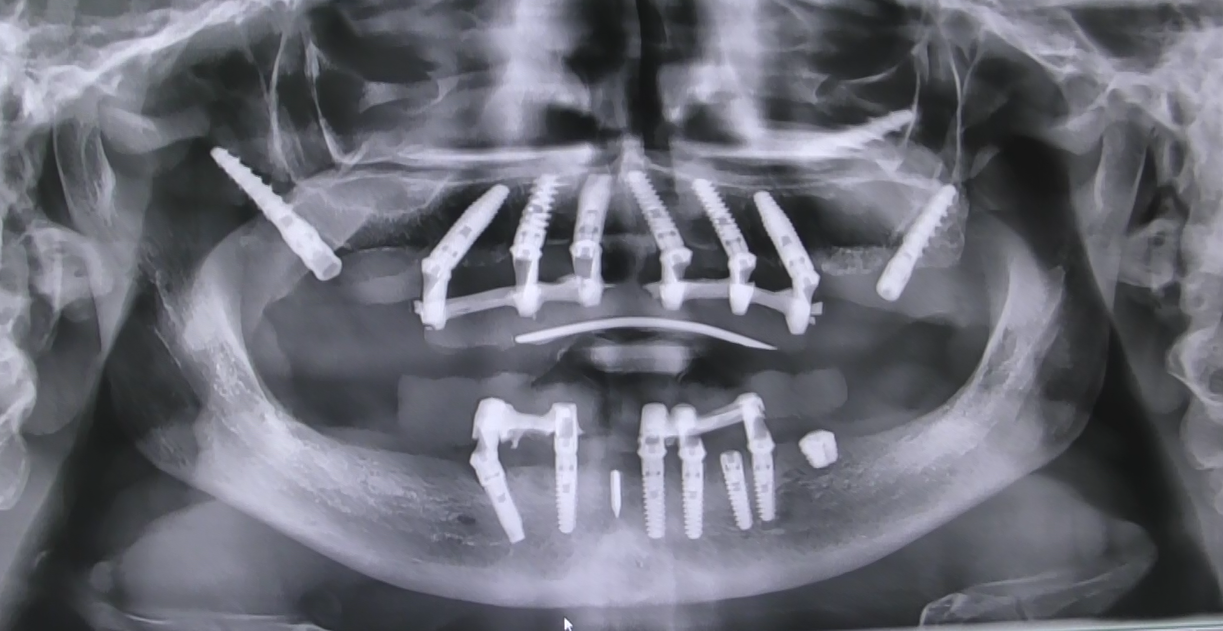
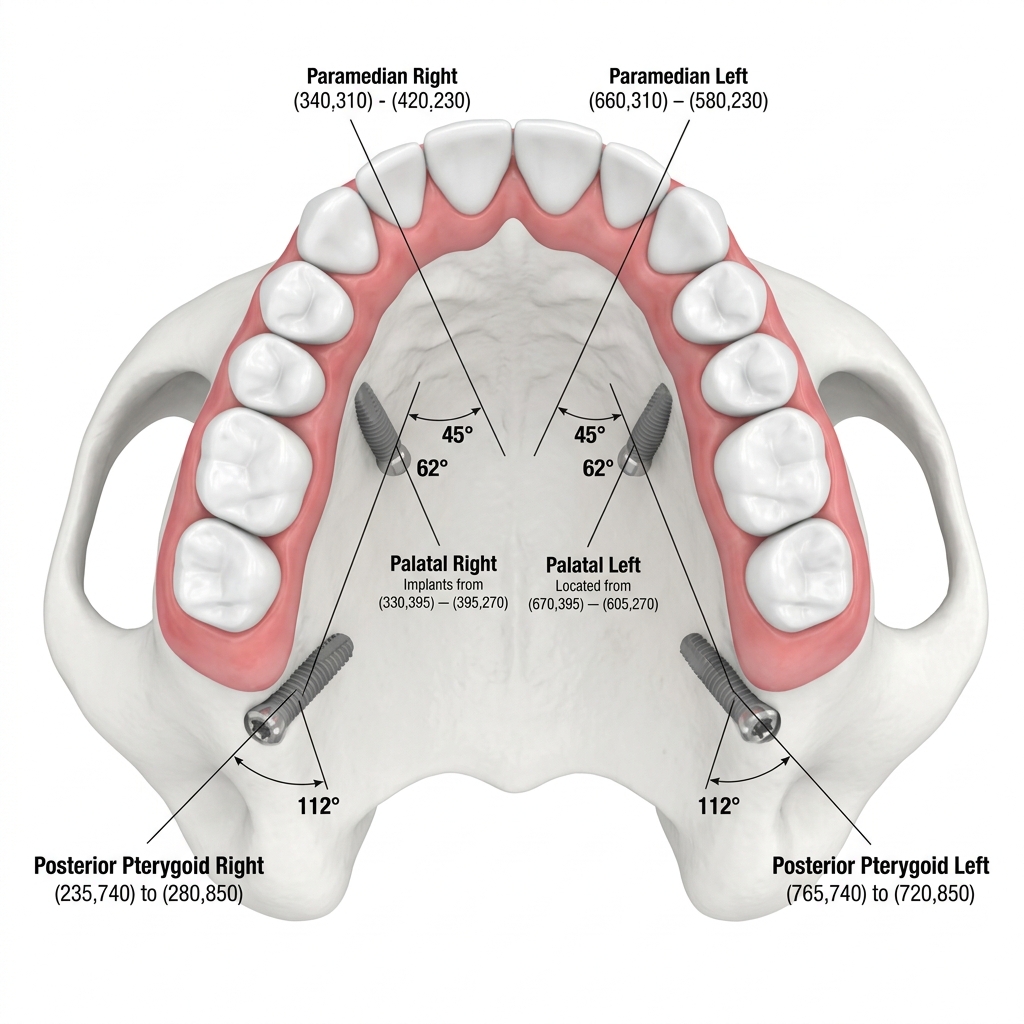
Thanks to the basal implants placed in zones 18/28 and 15/25, the Bilateral Sinus Solution™ (BSS) puts all the molars back and reactivates the masseter, redistributing the chewing force over the whole perimeter axis of the Circolare d'Autore®. The result is the restoration of the entire chewing force at 100%.
The patient does not chew with the implants
The patient chews with a system: teeth, implants, bone, muscles, joints, tongue, nervous system and occlusal contacts. When this system loses an important part of the dentition, the patient begins to chew mainly in front, to avoid certain foods, to use only one part of the mouth: the adaptation becomes his new habitual way of eating.
The patient chews with a system made of: teeth, implants, bone, muscles, joints, tongue, nervous system and occlusal contacts. When this system has lost an important part of the dentition for years, it can modify its way of functioning. The patient may begin to:
- chew mainly in front
- avoid certain foods
- use only one part of the mouth
- cut the food into small pieces
- choose softer foods
Slowly, what initially was an adaptation becomes his new habitual way of eating. A person can have an aesthetically perfect prosthesis, can smile and speak, but when eating uses mainly the anterior area: that is where he has learned to manage food.
The masseter and the chewing force
The masseter is one of the main elevator muscles of the mandible and is one of the great protagonists of the chewing force. When we return an adequate posterior dentition, the masticatory system can go back to using a part of the function that had been lost: the recovery is progressive, because the neuromuscular system must adapt.
The masseter is one of the main elevator muscles of the mandible and is one of the great protagonists of the chewing force. When the posterior teeth are missing, the masseter cannot express its function: power is not only force, it is the ability to cut, crush, grind, mix with saliva, move the bolus, coordinate mandible and tongue.
When we return an adequate posterior dentition, we can allow the system to recover progressively: the recovery is a journey, because the neuromuscular system must adapt to the new condition.
The molar is not a decorative tooth
The molar is the tooth that grinds: the one that allows shredding the food. Without posterior molars, chewing becomes frontal and ineffective. The BSS restores all the molars, allowing chewing any food with full power.
The molar is the tooth that grinds: the one that allows crushing the food. Without posterior molars, chewing becomes frontal and ineffective. The BSS restores all the molars, allowing chewing any food with full power.
How BSS restores 100% of the force
The BSS places basal implants in zone 18/28 (posterior pillars) and 15/25 (retrocanine fossae), restores all the molars, reactivates the masseter and distributes the force over the whole perimeter axis. The result is the restoration of 100% of the masticatory force with a complete arch of 14 teeth.
The BSS:
- Places basal implants in zones 18/28 (posterior pillars) and 15/25 (retrocanine fossae)
- Restores all the molars
- Reactivates the masseter
- Distributes the force over the whole perimeter axis
The result is the restoration of 100% of the chewing force with a complete arch of 14 teeth.
The perimeter axis of the Circolare d'Autore®
The Circolare d'Autore® distributes the masticatory force over the whole perimeter axis of the arch: no isolated load point, no cantilever, no anterior lever. The true posterior molars support the chewing and the masseter returns to express its full power.
The Circolare d'Autore® distributes the chewing force over the whole perimeter axis of the arch: no isolated load point, no cantilever, no anterior lever. The true posterior molars support the chewing and the masseter returns to express its full power.
Recovery is a journey
The recovery of chewing is progressive: the neuromuscular system must readapt to the new dentition. In the first days soft foods are used, then normal foods are gradually reintroduced. In weeks confidence is recovered and in months the full masticatory function.
The recovery of chewing is progressive: the neuromuscular system must readapt to the new dentition. In the first days soft foods are used, then the normal foods are gradually reintroduced. In weeks the confidence is recovered and in months the full masticatory function.
The Circolare d'Autore® prosthesis
- 14 teeth per arch, including all posterior molars
- Zero fake gum: the teeth emerge from the natural gum
- Zirconia + layered ceramic, with registered trademark ®
- Custom-made: every prosthesis is a unique piece designed for the patient
Discover all the details on the dedicated page: Circolare d'Autore® — the definitive prosthesis without fake gum.