Toronto Bridge: The Fixed Prosthesis on Implants (and Its Hidden Limits)

1. What is the Toronto Bridge?
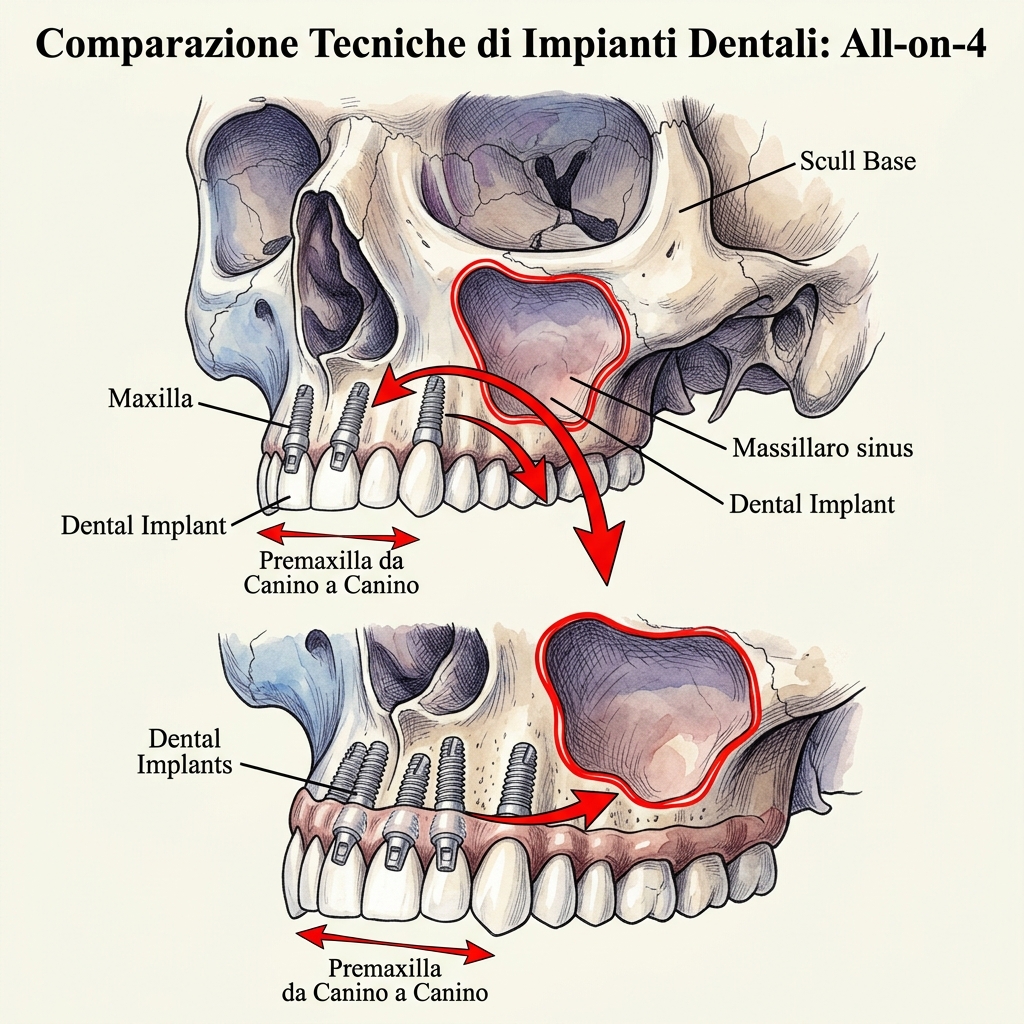
The Toronto Bridge is the classic fixed prosthesis with immediate or delayed loading used in commercial and traditional dentistry. It is a single circular structure (in resin, ceramic or zirconia) that replaces an entire dental arch and is screwed directly onto a number of dental implants that usually varies from 4 (All-on-4) to 6 (All-on-6).
Born decades ago as a solution to free the patient from the removable denture, it is proposed as the gold standard of fixed rehabilitation.
2. When It Is Proposed and How It Is Structured
The typical patient arrives at the practice with a compromised or completely edentulous arch. The dental centre proposes the Toronto Bridge by placing the pins in the anterior part of the alveolar bone (which is the area that resorbs least) and then mounting the prosthesis.
But to cover the space and support the missing teeth — especially the posterior ones — the traditional structure presents enormous structural limits:
- The absence of complete posterior molars: Many Toronto Bridges are "incomplete", i.e. they stop at the premolars or offer reduced chewing, leaving the true molars uncovered for fear of overloading the anterior implants.
- The famous "fake gums": Since the bone has receded, the prosthesis must compensate for the loss of bone volume with a thick acrylic or ceramic bar (the fake gum) that simulates the lost tissues.
3. The Ordeal and the Hidden Problems of the Traditional Toronto
Behind the commercial promise of the "fixed tooth in a day" with the Toronto Bridge, there are problems that patients only discover over time:
- Peri-implantitis and food stagnation: Under the fake gum of the Toronto Bridge spaces are created where food and plaque inevitably stagnate. Cleaning under the structure requires complex manoeuvres (with special interdental brushes and specific floss), and poor hygiene triggers silent infections (peri-implantitis) that lead to the loss of the implants.
- Biomechanical collapse and overload: Since the implants are concentrated almost all in the anterior area, the force of chewing discharges unnaturally on the support pins, causing over time mechanical wear, prosthesis fractures or structural failures.
- Limited chewing: Without a real posterior load distribution, the patient does not chew with the same power and naturalness of a complete and native dentition.
4. How the Future Changes with the Bilateral Sinus Solution™ (BSS)
If you reject the compromises of the old Toronto Bridge — with its fake gums that create infections, the missing molars and the load concentrated only in front — the radical answer is the Bilateral Sinus Solution™:
- Goodbye fake gums: Thanks to the strategic anchorage in the deep basal bone (using pillars in zones 18, 28, 15 and 25 and bypassing the sinuses), the prosthesis rests directly and cleanly on the ridge, without acrylic barriers that block food.
- All molars restored: You get a complete dentition of 14 teeth, with the total reactivation of the posterior molars for strong, powerful and definitive chewing.
- Triple stability and without grafts: Using the basal bone that never resorbs, you eliminate the risks of major sinus lifts, avoid bone harvesting and get a solid and durable fixed structure in just a few hours.
The Circolare d'Autore® prosthesis
- 14 teeth per arch, including all posterior molars
- Zero fake gum: the teeth emerge from the natural gum
- Zirconia + layered ceramic, with registered trademark ®
- Custom-made: every prosthesis is a unique piece designed for the patient
Discover all the details on the dedicated page: Circolare d'Autore® — the definitive prosthesis without fake gum.
The section: BSS vs Traditional Techniques
How BSS Replaces the Traditional Techniques
- Bilateral Sinus Solution™ (BSS)
- Autologous bone harvesting and grafts
- Autologous bone grafts
- Major maxillary sinus lifts
- Zygomatic implants
- All-on-6 implantology
- All-on-4 implantology
- Toronto Bridge dental prosthesis