The Limits of the Traditional Toronto Bridge: From Fake Gums to Missing Molars (and How BSS Solves Everything in 2 Hours)
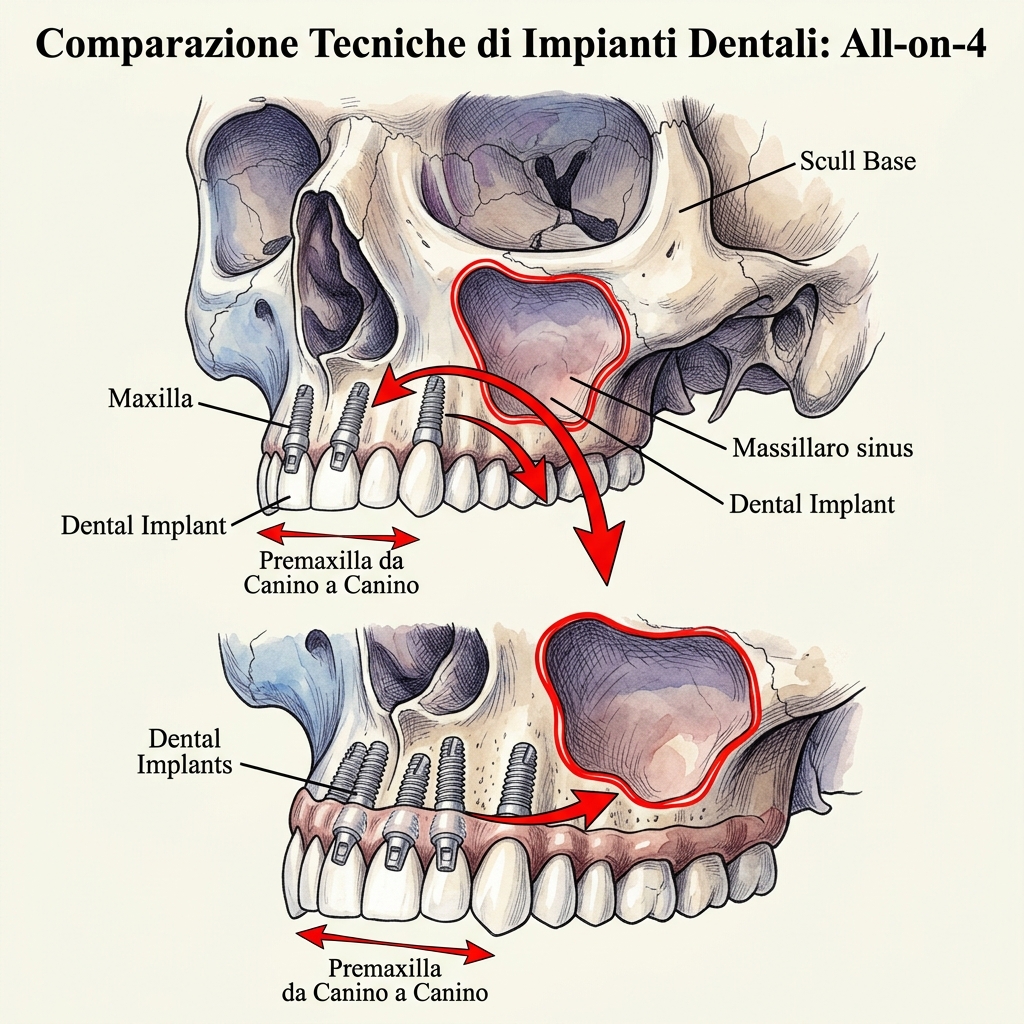
1. When You Hear This Terminology (The Verdict of the Fixed Prosthesis on a Bar)
When a patient turns to a dental centre to rehabilitate a compromised or completely edentulous arch, the standard answer proposed is almost always the same: "The Toronto Bridge".
The doctor or commercial centre welcomes you explaining the treatment plan: "We extract the remaining teeth, place a variable number of implants in the alveolar bone and screw a fixed bridge structure on top — the Toronto Bridge — that covers the arch". It is presented as the definitive achievement of prosthetic modernity to say goodbye to the removable denture.
2. The Ordeal: What the Patient Really Goes Through
But behind the reassuring and modern name of the Toronto Bridge, what is the patient really going through in everyday life and what structural limits does he carry in his mouth?
- Incomplete chewing and lack of molars: Due to the chronic lack of bone in the posterior sectors and the limits of the old traditional implants, the standard Toronto Bridge is almost always "short". That is, it stops before the posterior sectors: the true molars are completely missing, and the patient ends up chewing only with the premolars, losing power and effectiveness in grinding food.
- The enormous fake gums to fill the void: Since the alveolar bone has receded and the maxillary sinuses have expanded, the prosthetic structure must necessarily compensate for the enormous empty space with a thick bar of resin or pink ceramic — the fake gum. This abnormal volume creates a closed "tunnel" under the prosthesis where food and bacteria constantly accumulate.
- The impossibility of cleaning and the risk of peri-implantitis: The bulky fake gums and narrow passages make correct home hygiene with floss or interdental brushes impossible. This favours the accumulation of invisible plaque, triggering deep chronic infections (peri-implantitis) that slowly lead to the failure of the whole structure.
3. The Startling Discovery: A Complete Dentition Was Possible
The motivation that pushes the patient to accept the Toronto Bridge is the sacred desire to have fixed, beautiful and easy-to-manage teeth.
But what would be the biggest surprise for you if you discovered that the limits of the Toronto Bridge (giant fake gums and missing molars) are not a biological limit of your body, but a technical limit of the dentist who does not know how to use the deep bone? Think what it means to discover that with an advanced anatomical planning a complete dentition could have been built without compromises.
4. How the Bilateral Sinus Solution™ Would Have Avoided All This
If that patient had been evaluated by a maxillofacial surgeon expert in anatomy and dissection, included in our clinical network, the planning would have been opposite and definitive:
- Goodbye fake gums: Thanks to the strategic anchorage in the deep basal bone (using pillars in zones 18, 28, 15 and 25 and bypassing the sinuses), the prosthesis rests directly and cleanly on the ridge, without acrylic barriers that block food.
- All molars restored: You get a complete dentition of 14 teeth, with the total reactivation of the posterior molars for strong, powerful and definitive chewing.
- Triple stability and without grafts: Using the basal bone that never resorbs, you eliminate the risks of major sinus lifts, avoid bone harvesting and get a solid and durable fixed structure in just a few hours.
The Circolare d'Autore® prosthesis
- 14 teeth per arch, including all posterior molars
- Zero fake gum: the teeth emerge from the natural gum
- Zirconia + layered ceramic, with registered trademark ®
- Custom-made: every prosthesis is a unique piece designed for the patient
Discover all the details on the dedicated page: Circolare d'Autore® — the definitive prosthesis without fake gum.