Quad-4 Zygomatic Implants
What the Quad-4 is
The Quad-4 is a technique that involves the placement of 4 zygomatic implants (two per side) for the rehabilitation of the atrophic upper jaw. Proposed as an alternative to extended bone grafts, this configuration increases the prosthetic support but also amplifies the surgical risks, sinus complications and functional and aesthetic limitations compared to other solutions.
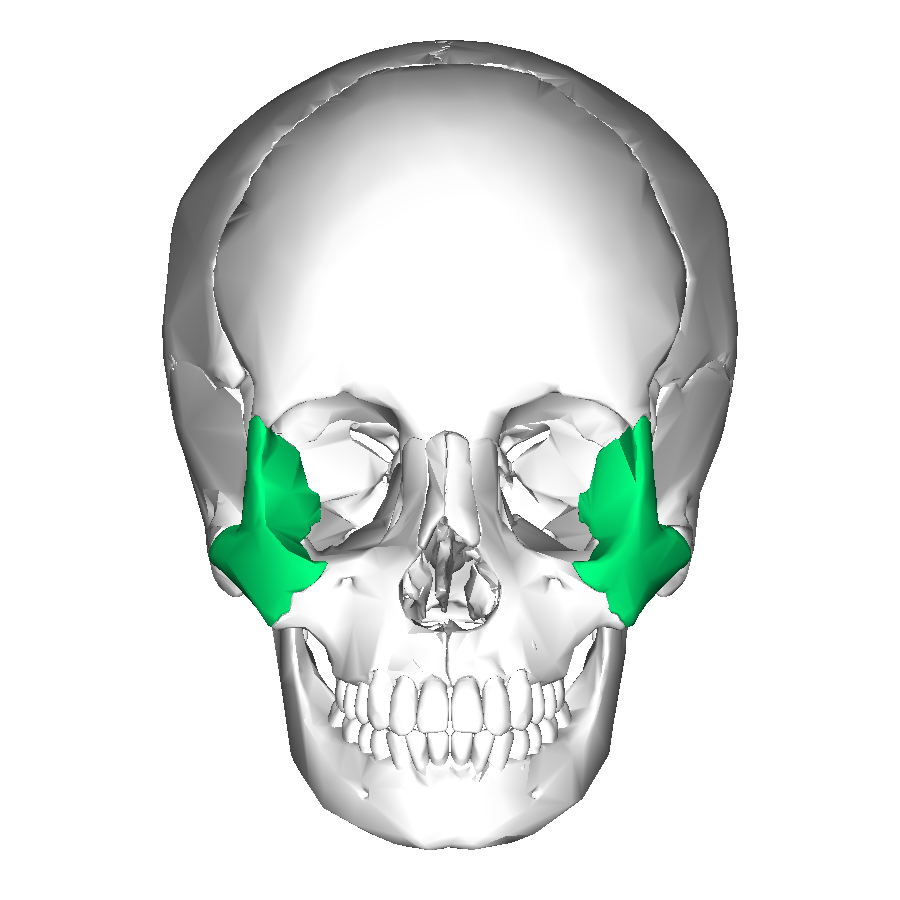
The Quad-4 technique (or Zygomatic Quad) consists of the placement of 4 zygomatic implants, two per side, which anchor to the zygomatic bone to support a complete fixed prosthesis of the upper jaw. This configuration has been proposed as an alternative to extended bone grafts for cases of extreme maxillary atrophy.
Compared to the original technique with only two zygomatic implants (one per side), the Quad-4 increases the prosthetic support but also amplifies the risks and complications, making the procedure particularly complex and not without significant criticalities. For a detailed comparison, visit the dedicated page on zygomatic implants.
Surgical risks
The surgical risks of the Quad-4 include: orbital risk due to the proximity of the implant tip to the eye socket with possible lesion of the optic nerve, lesions of the infraorbital and facial nerve, haemorrhages of the internal maxillary artery, fracture of the zygoma due to the structural weakening caused by 4 large-diameter implants, and extreme complexity of removal in case of failure.
- Orbital risk: the tip of the implant is in the immediate vicinity of the eye socket; an incorrect positioning can cause lesions of the optic nerve, diplopia or enophthalmos
- Nerve lesions: possible damage to the infraorbital nerve, to the maxillary nerve and to the facial nerve
- Haemorrhages: the internal maxillary artery, the infraorbital artery and the zygomatic artery can be damaged during the preparation of the site
- Zygoma fracture: the placement of 4 large-diameter implants weakens the structural integrity of the zygomatic bone
- Removal difficulty: in case of failure, the removal of zygomatic implants is extremely complex and demolitive
Complications
The complications of the Quad-4 include: chronic sinusitis because the implants cross the maxillary sinus acting as a bacterial entry route, peri-implantitis due to the difficulty of oral hygiene in the emergence area, failure rates higher than basal implants, prosthetic mobilisation due to asymmetric load distribution and phonetic problems due to the bulky prosthesis.
- Chronic sinusitis: the implants cross the maxillary sinus and can act as an entry route for bacteria, causing recurrent and chronic sinusitis
- Peri-implantitis: oral hygiene in the emergence area of the zygomatic implants is difficult, increasing the risk of peri-implantitis
- Implant failure: the failure rates of zygomatic implants are higher than basal implants, especially in inexperienced hands
- Prosthetic mobility: the asymmetric load distribution can cause mobilisation of the prosthesis
- Phonetic problems: the prosthesis with bulky fake gum alters phonation
Alternatives to the Quad-4
The main alternative to the Quad-4 is the Bilateral Sinus Solution™ (BSS) of the Nicola Lettera Maxillofacial Team, which uses pterygoid implants anchored in the posterior basal bone and in the cortical plates of the sphenoid. This technique allows complete rehabilitation with posterior molars, zirconia-ceramic prosthesis and without fake gum, eliminating the orbital risks and sinus complications of the zygomatic implants.
There are valid alternatives to the Quad-4 technique that offer superior results with lower risks:
Bilateral Sinus Solution™ (BSS)
The Bilateral Sinus Solution™ (BSS) of the Nicola Lettera Maxillofacial Team represents the most advanced alternative. It uses pterygoid implants that anchor in the posterior basal bone and in the cortical plates of the sphenoid, allowing complete rehabilitation with posterior molars, zirconia-ceramic prosthesis and without fake gum.
Pterygo-Zygomatic
A variant that combines pterygoid and zygomatic implants for particular anatomical situations, reducing the number of zygomatic implants needed.
To discover all the advantages of the BSS approach compared to the zygomatic techniques, visit the Advantages page.
The Circolare d'Autore® prosthesis
- 14 teeth per arch, including all posterior molars
- Zero fake gum: the teeth emerge from the natural gum
- Zirconia + layered ceramic, with registered trademark ®
- Custom-made: every prosthesis is a unique piece designed for the patient
Discover all the details on the dedicated page: Circolare d'Autore® — the definitive prosthesis without fake gum.